Allergy-Safe Catering: How to Plan an Event Around Food Allergies
For a guest with a serious food allergy, a catered event can be stressful. A shared buffet, unfamiliar dishes, hidden ingredients, and busy servers all add risk. Many people with allergies eat beforehand, bring their own food, or skip events altogether. For hosts, planning an allergy-safe event is not only about avoiding a medical emergency; it is about making every guest feel welcome and safe.
Here is how to plan catering with food allergies in mind, and what to ask your caterer.
The Most Common Food Allergies
In the United States, nine foods account for the large majority of serious allergic reactions: milk, eggs, fish, crustacean shellfish, tree nuts, peanuts, wheat, soybeans, and sesame. These are recognized as major food allergens under federal labeling law. When planning a menu, these are the ingredients to track most carefully.
Celiac disease, which requires strict avoidance of gluten, is not an allergy but requires similar care, since even small amounts of gluten can cause harm.
Start With the Invitation
The best allergy plan begins with good information. Ask about food allergies and dietary restrictions on the invitation, RSVP card, or registration form. Be specific: ask guests to list allergies and how severe they are. Share this information with your caterer well before the event, not on the day.
What to Ask Your Caterer
Not all caterers handle allergies the same way. Before booking, ask:
- How do you handle food allergies in your kitchen and during service?
- Can you prepare dishes free of specific allergens and keep them separate?
- How do you prevent cross-contact during preparation, transport, and serving?
- Do you label dishes with allergen information?
- Are your staff trained to answer allergy questions accurately?
Planning an event with allergy needs? Call Chef's Catering at 585-752-2149 or see our catering FAQs, and tell us about your guests' needs early.
Understanding Cross-Contact
Cross-contact happens when an allergen is transferred to a food that should not contain it, for example through shared utensils, cutting boards, fryers, or serving spoons. For guests with severe allergies, even trace amounts can trigger a reaction. Simply leaving an ingredient out of a dish is not enough if the dish was prepared alongside allergens.
A caterer serious about allergies will discuss how they manage preparation and service. Be honest about the severity of guests' allergies so the caterer can plan appropriately, and so you both understand what level of separation is realistic.
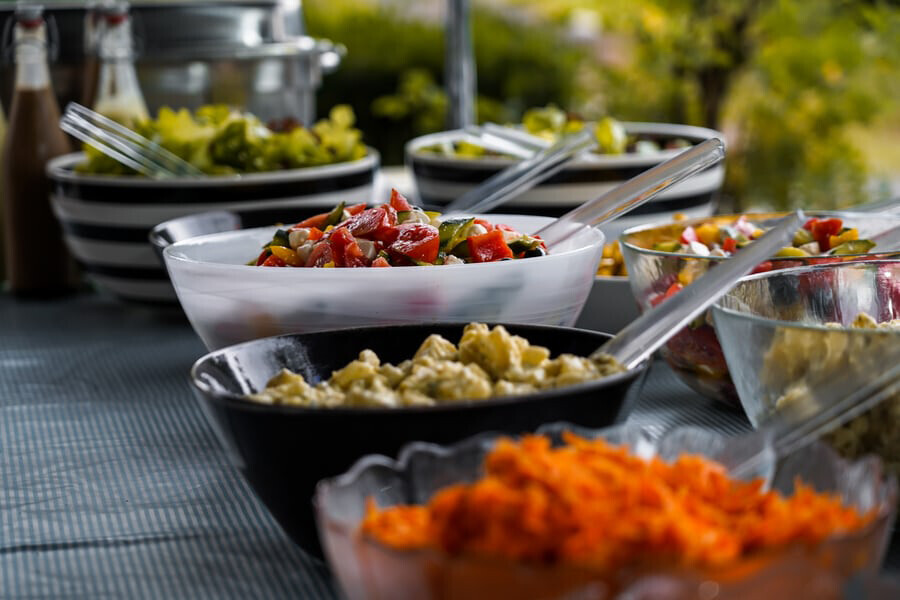
Buffets Require Extra Care
Buffets are where cross-contact risk is highest. Guests move serving spoons between dishes, food spills from one tray into another, and garnishes travel. To reduce risk:
Place allergen-free dishes at the start of the line or on a separate table. Give each dish its own utensil. Label every dish clearly. Have staff serve allergy-sensitive dishes rather than relying on self-service. For guests with severe allergies, consider individually plated or packaged meals prepared separately.
Plated and Packaged Meals
For guests with serious allergies, an individually prepared plate or packaged meal, labeled with the guest's name, is often the safest approach. It is prepared separately, kept covered, and delivered directly to the guest. This works well at weddings, banquets, and corporate events with assigned seating.
Labeling Matters
Clear labels on every dish, listing common allergens, help guests make informed choices without asking a server about every item. Labels should be accurate, legible, and placed directly with the dish. When in doubt, ingredients should be listed rather than guessed.
Nut-Free Events
Peanut and tree nut allergies are among the most severe and common, especially in children. Many schools, children's events, and some workplaces choose to make events entirely nut-free. If you go this route, communicate it to your caterer and also to guests, so no one brings a nut-containing dessert from home.
Gluten-Free and Celiac Guests
Gluten-free dishes are increasingly common, but for guests with celiac disease, preparation matters as much as ingredients. Shared fryers, flour in the air, and shared toasters can all introduce gluten. Ask your caterer specifically about celiac-safe preparation if any guests require it.
Desserts and Hidden Allergens
Desserts are a common source of hidden allergens, including nuts, eggs, dairy, and wheat. Ask about dessert ingredients specifically and consider including at least one dessert free of the most common allergens, clearly labeled.
Have a Plan for Emergencies
Even with careful planning, reactions can happen. Make sure guests with severe allergies know they should bring any prescribed emergency medication, and that event staff know where to find help and how to call for emergency services. A little preparation goes a long way.
Allergies at Weddings
Weddings bring together guests from every part of a couple's life, and the guest list almost always includes someone with a food allergy. Add an allergy question to the RSVP card or wedding website, compile the answers with guest names and table assignments, and give the list to your caterer with the final headcount. Servers can then deliver the right plate to the right seat without anyone having to explain their needs at the table.
Corporate and Conference Events
For corporate events and conferences, collect dietary needs during registration. Many organizations now include a standard question about allergies and dietary restrictions. Share the compiled list with your caterer with enough lead time to plan, and consider name labels on individual meals for attendees with severe allergies.
Children's Events
Allergies are especially common among children, and kids may not reliably recognize or avoid allergens on their own. For birthday parties, school events, and family gatherings, keep the menu simple, avoid the most common allergens where possible, and make sure an adult knows which children have allergies.
Let's Plan a Safe Event
Every guest deserves to enjoy a meal without fear. Chef's Catering works with hosts across Rochester, Monroe County, and Western New York to plan menus that accommodate food allergies thoughtfully, with clear communication from the first conversation to the final plate.
Call us at 585-752-2149 to discuss your event, or reach out online and we will follow up promptly. Tell us about your guests and we will plan around them.
Chef's Catering is a full-service catering company based in Spencerport, NY, serving Rochester, Monroe County, and Western New York. Explore all of our catering services.
‹ Back
Recent Posts
-

Holiday Open House Catering: Hosting Clients and Neighbors in Rochester
November 24, 2026
-
Catering in Spencerport, Brockport, Greece, and Rochester's West Side
November 22, 2026
-
-
Allergy-Safe Catering: How to Plan an Event Around Food Allergies
November 16, 2026
-
Friendsgiving in Rochester: Catering a Modern Holiday Tradition
November 12, 2026